I see patients with foot pain daily. The vast majority fall into two occupations: postal workers, or nurses (or within the employ of a hospital). This blog is aimed more for the healthcare profession, however, both these professions (and many others) are on their feet for many long hours every working day. They naturally search for footwear which are comfortable, easy on the feet, and stylish if at all possible. The hospital employed crowd turns to one brand of shoewear the majority of the time: Danskos.
Danksos: glorified clogs. Small heel, rigid, and a God-send for those who have foot pain at work. I’ve been told it’s like a hug of relief for someone with sore feet.
Shouldn’t I be happy that my patients have found relief from their affliction? Why would I not recommend something that gives pain relief?
Let’s go over the Dansko:
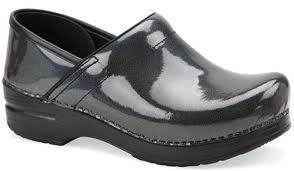
You’ll note that there is a decent heel in these shoes, good lasts (sides) for the foot support and a nice thick sole which, if felt, is quite rigid. Your foot, once in these shoes, isn’t moving. When the foot isn’t required to move, you eliminate the vast majority of postural dysfunctions and pain in the foot related to poor mobility control. Good right?
Not Exactly- let’s take a look at our natural foot mechanics and the requirements of motion for a ‘normal’ gait cycle.
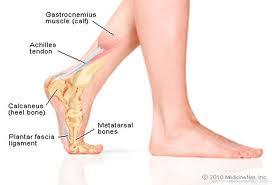
Take a look at this picture of someone the computer pictured with a normal gait. The patient is in loading phase on the right foot and terminal stance/preswing on the left leg. I want to focus on the left leg first. Note that the foot has gone to some extreme angles to perform this act. Look at the big toe: it extends to nearly 90 degrees to allow for loading across the great toe. Literature would suggest this needs to be at least 70 degrees to keep a normal gait. The plantar fascia attaches to all our toes. This, in turn, must get stretched out when the toes go into extension – this particular tissue has some elastic capabilities and will provide some assistance in bringing the foot back to neutral once unloaded to prepare it to handle the weight of the person when it becomes loaded.
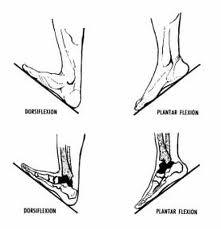
Once we load our weight onto our foot, we need to transfer that weight over the ankle to propel us forward. This requires the ankle to go into dorsiflexion. Dorsiflexion is the when the foot moves towards the shin – current literature suggests that this should 10-20 degrees. This is measured relative to the ankle in standing. A neutral ankle is considered perpendicular to the shin – more is dorsiflexion, less is considered plantarflexion.
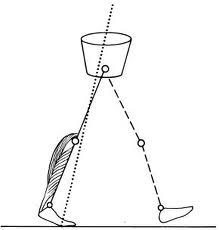
As you can see in this model, the stick characters right leg, when in ‘terminal stance’ needs to have some dorsiflexion to it. To allow this to happen, the calf musculature needs to be flexible and long to accommodate for this range of motion.
Now lets go back to the Dansko:
Elevated heel: this serves to point the toe (plantarflex) and shorten the calf. This large amount of plantarflexion reduces the need to dorsiflex to achieve a forward weight shift. In fact, when wearing a shoe with a heel, you NEVER go into dorsiflexion to achieve propulsion.
Stiff Sole: This serves to eliminate the need for the plantar fascia to stretch out, the need for the great toe to extend and effectively removes the pre-swing phase from our gait patterns. Without a plantar fascia stretch, without great toe extension, the foot is kept neutral and without any motion at all occuring in the foot or ankle. This feels good to the patient who has foot problems – this effectively removes the strain on foot tissues. Thus why Danksos are so popular.
I completely agree that Dankso shoewear will eliminate pain in most cases. My issue occurs when patients then take their Danksos off.
Now we are presented with a patient who, for most of their work week, has shortened their calf, tightened their plantar fascia, and limited their great toe extension. This is a patient who now steps into a shoe which allows all these motions to occur. The foot has not been routinely exposed to this and suddenly strains, tears, and inflammation occur as a result of rapid and excessive movement introduction.
The moral of this story? Danksos will most likely take away your foot pain. BUT, this occurs at the cost of removing all normal foot movement from your foot and ankle. Injuries occur when we ask the foot who has been stiffened up to perform motions and mobility it isn’t primed to do when placed in alternative shoewear.
These shoes, while eliminating pain in the short term, present alterations in normal gait that will eventually lead to a myriad of issues in the long term.
That doesn’t sound like a solution I want to be a part of.